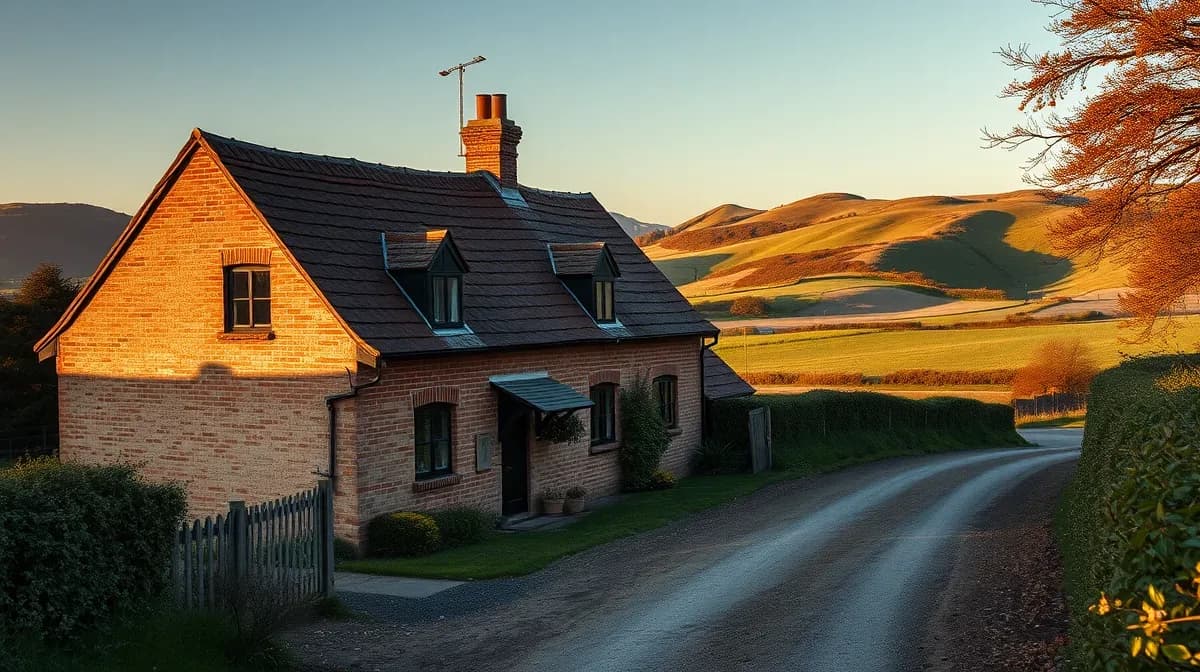
Newbury Roofing Company | Roofers in Newbury — Re-Roofing, Barn & Stable, Flat & Commercial Roofs
Roofers for West Berkshire — repairs, re-roofs, flat roofs and leadwork. Free surveys, fixed written quotes, tidy workmanship.
Newbury Roofing Company are roofers for West Berkshire — Newbury and Thatcham, out west through Hungerford and Kintbury, north to Chieveley and Hermitage, and up onto the downs around Lambourn and Compton. Houses, cottages, barns, stables and commercial buildings: full roof replacement, clay tile and slate, sheeting, flat roofs, chimney work, leadwork and guttering.
Two things make roofing out here different from roofing in a town. The first is wind. The North Wessex Downs are open country, and a roof standing on a ridge above Lambourn or Compton takes a loading a sheltered street never sees. Fixing specifications are calculated for exposure for a reason, and a verge detail that survives forty years in Newbury town centre can be stripped off a downland cottage in a single February gale.
The second is what the buildings are made of. West Berkshire runs to hand-made clay peg tile, plain tile and Welsh slate on the houses, and to fibre-cement and profiled sheet on the barns, stables and yards — including the training yards around Lambourn, where a roof over stock is not a shed roof but a working building. We are set up to do both on the same visit, because out here nobody wants three separate trades booking three separate days.
Four things we get called out for most
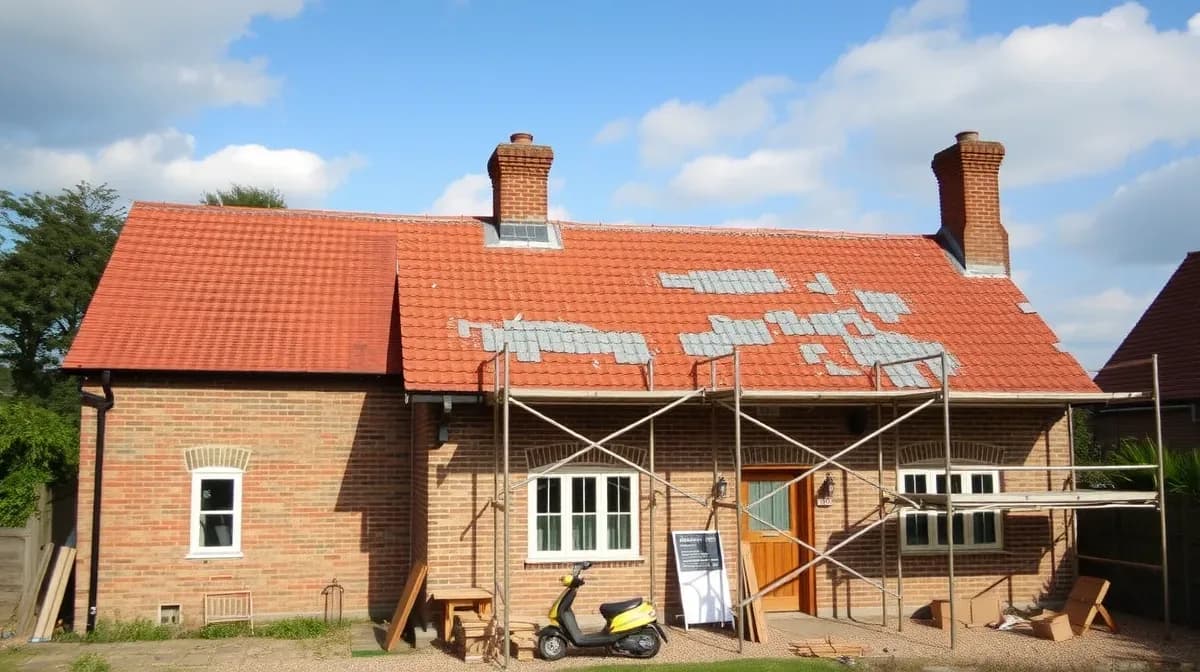
Re-Roofing & New Roofs
Full strip and re-cover — breathable membrane, graded battens and a fixing spec worked out for the exposure the roof actually sits in.
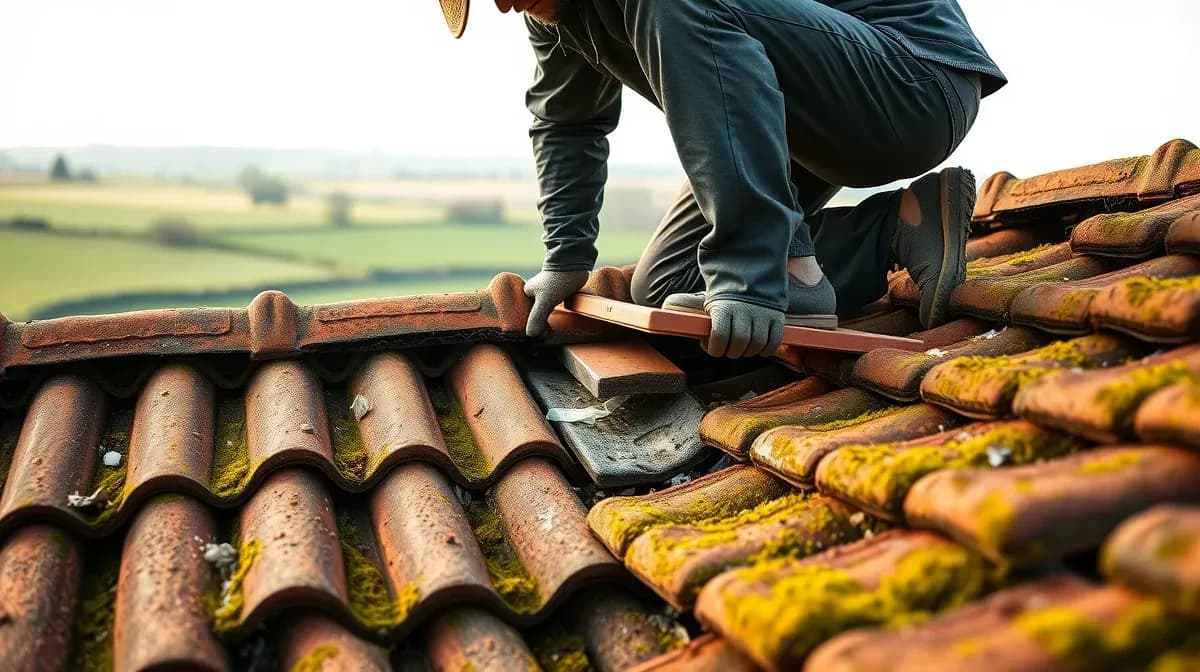
Roof Repairs
Slipped tiles, wind-lifted ridges, failed valleys and storm damage. Fixed properly rather than smeared over with mortar.
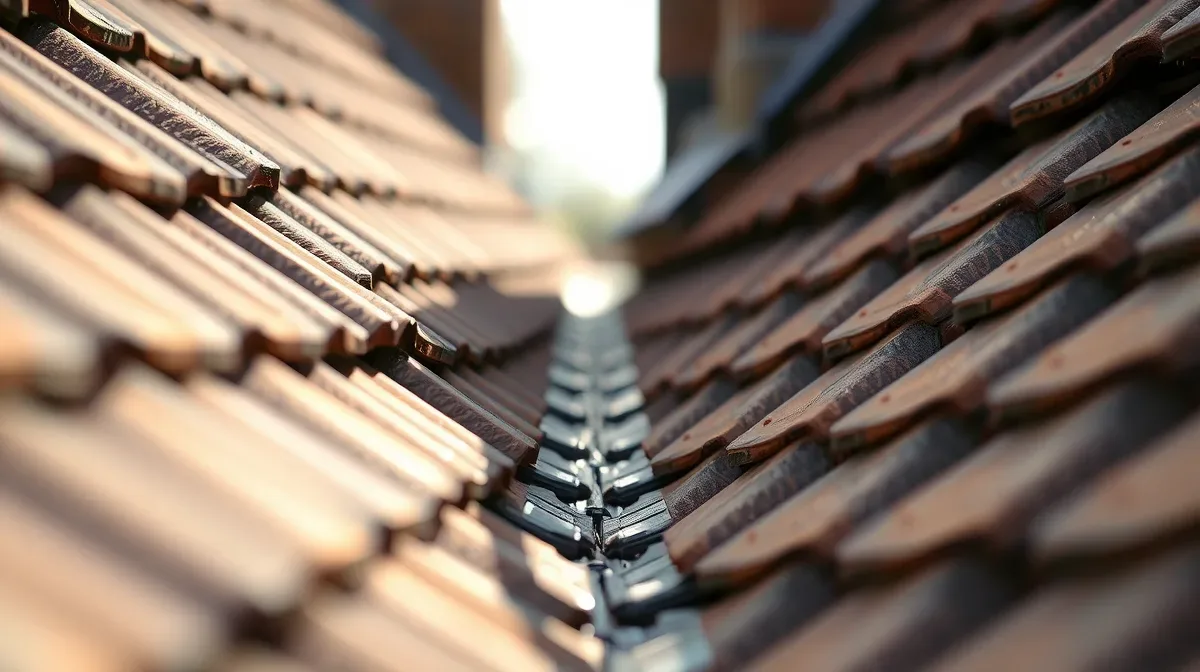
Chimneys & Leadwork
Repointing, flaunching and code 4 and code 5 lead flashing on stacks that stand well clear of everything around them.
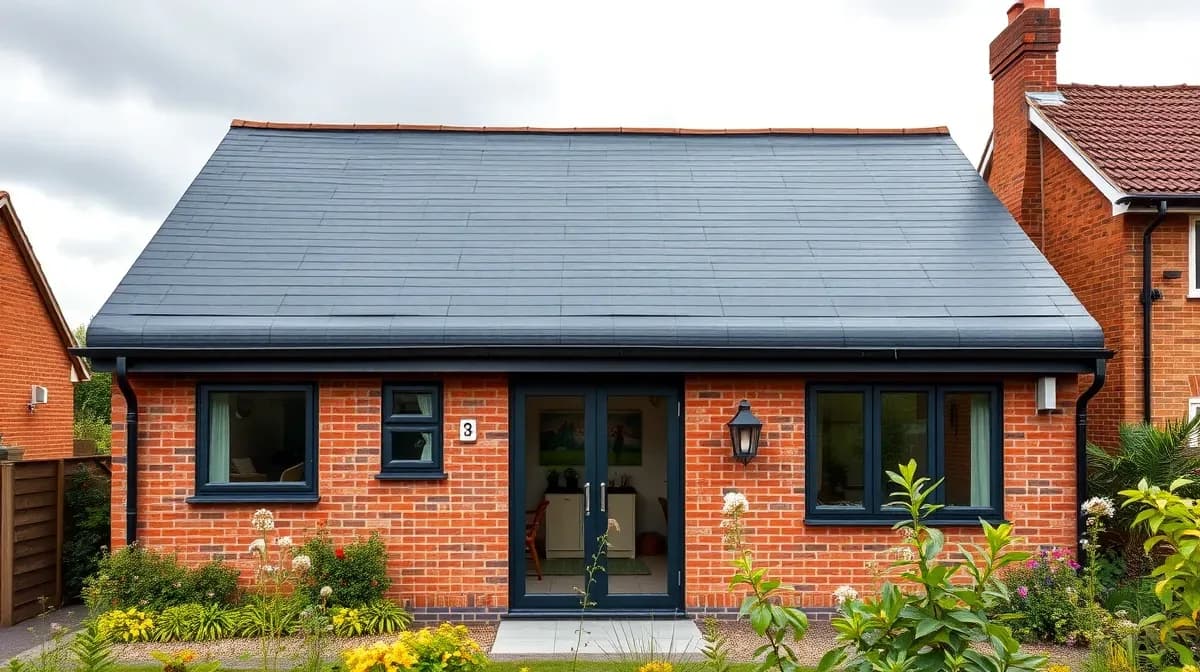
Flat Roofs
Tired felt on extensions, garages and outbuildings replaced with EPDM rubber or GRP that lasts decades.
Re-roofing and new roofs across West Berkshire
Re-roofing and full roof replacement
Taking the covering back to the rafters, renewing membrane and battens and re-covering to suit the building and its exposure. On an isolated property this is a once-in-a-generation job, so it is worth specifying properly rather than cheaply.
Clay peg and plain tile roofs
Hand-made clay is what most of the older villages are roofed in, and it varies in colour, camber and size in a way machine-made tile does not. Salvage goes to the elevations that face the lane; new stock goes where nobody will ever compare them.
Torching and traditional roof build-ups
Plenty of period roofs here were never felted at all — the underside was torched with haired lime mortar. Sealing one of those up tight with a modern impermeable layer traps moisture against old oak, so the specification has to breathe.
Slate roofing
Welsh slate on the Victorian houses in town and on the larger village properties. Where slates are sliding it is nearly always the fixings that have corroded away rather than the slate wearing out, and salvage is usually viable.
Fixing specification for exposed sites
How many nails, how many clips, and where, is a calculation based on wind zone, site altitude, roof pitch and how sheltered the building is. On the downs that calculation comes back stricter, and a roof fixed to a lowland spec will not stay put.
Ridge and verge on exposed roofs
Mortar-bedded ridges are the first casualty of a hilltop position. Mechanically fixed ridge and verge systems are now the standard requirement anyway, and out here they are not a formality — they are the reason the ridge is still there in March.
Roof timber repairs
Where damp or beetle has eaten the ends of the structure, the decayed section is cut out and a new length scarfed in. It saves the historic timber either side of it, and on the heavy oak found in older village properties and barns that is a saving worth having.
Insulation and ventilation at re-roof
With the eaves open, this is the one chance to get airflow right. Rural lofts with old torching and new insulation are a classic recipe for condensation being misdiagnosed as a leak.
Barn, stable and outbuilding roofs
This is the part of the trade most town roofers do not touch, and in West Berkshire it is a large share of the work — and the largest single roofs anyone here owns.
Stable and yard roofs
Lambourn and the valleys around it hold hundreds of horses in training, and every one of those yards depends on dry buildings. Stable roofs get worked on around the string and around feed times, not whenever it suits the roofer.
Agricultural barn roofs
Sheeting, purlin repairs and full replacement on livestock and machinery buildings. These are large areas and simple details, and the cost is driven by access, safe working and how much of the frame is sound.
Fibre-cement and asbestos sheet roofs
Older farm and stable roofs are commonly cement sheet, and pre-2000 sheeting may contain asbestos. We survey before quoting and arrange lawful removal — this is not something to break up and load into a trailer.
Profiled steel and box-profile sheeting
Modern replacement sheeting in insulated or single-skin form, with the fixings and flashings specified for a building that will be in the wind with no shelter around it.
Rooflights and ventilation in livestock buildings
Light and airflow are welfare matters in a stable or a stock shed, not extras. Translucent sheets and ridge ventilation get planned into a re-sheet rather than added afterwards.
Garden rooms, workshops and garages
Smaller outbuildings — home offices, workshops, stable blocks converted to storage — roofed or re-roofed to the same standard as the house, which is not always what they were given originally.
Listed and traditional farm buildings
Older barns are frequently listed or sit inside the North Wessex Downs National Landscape, both of which constrain materials and appearance. Consent comes before scaffold, not after.
Roof repairs, leaks and storm damage
Roof repairs
Individual tiles and slates, ridge lines, valleys and flashings. If what is underneath is still doing its job, patching the covering is genuinely the correct call, and that is what goes on the quote — not a re-roof dressed up as urgent.
Roof leak repair
The wet patch on a ceiling and the hole in the roof are rarely in the same place. We follow it back through the loft to the actual entry point, which is the only way the repair holds.
Emergency roof repairs
Storm work and live leaks, made safe and covered on the first visit where the weather allows. Everything gets photographed before it is touched.
Wind and storm damage
Uplift starts at an edge — a verge, a ridge end, an eaves course — and then travels. Catching it at one lifted tile is a morning's work; leaving it until spring is a different quote entirely.
Insurance reports and claims
Dated photographs, a written account of what failed and why, and an itemised repair cost. Temporary weatherproofing is quoted separately from the permanent repair so nothing is double-counted.
Valley and flashing repairs
Valleys take the water off two slopes at once and work harder than anything else on the roof. Split lead and cracked mortar valleys are renewed, not filled.
Roof moss removal
Tree-lined lanes and damp valleys grow moss quickly, and it holds water against the tile while blocking the gutters below. It is scraped and brushed off — never pressure-washed, which damages the tile face.
Roof surveys and reports
A written, photographed opinion on what a roof needs and when. Commonly wanted for a purchase, a probate property or a farm building nobody has been on top of in years.
Flat roofs, roof windows and garage roofs
EPDM rubber flat roofing
A rubber membrane bonded down cold in a single sheet. No flame, which matters on buildings with old timber and stored fodder anywhere nearby, and almost nothing across the open roof that can come apart.
GRP fibreglass flat roofing
Formed and cured in position so upstands, outlets and awkward corners are all one continuous piece. The tougher option where a roof will be walked on.
Flat roof replacement on extensions
Rear extensions from the 1970s and 80s are still on their first felt covering in most cases. Renewal is short work and the room underneath carries on being used.
Garage and car port roofs
Detached garages, cart sheds and open-sided car ports, including older cement-sheet coverings which are checked for asbestos content before anything is disturbed.
Velux and roof window installation
Whether we are cutting a fresh opening into a roof slope or dealing with a unit that has started dripping, the flashing kit has to be the one made for that tile profile. Fit a flat-roof kit under a deep-profile tile and it will let water past every time it rains hard.
Rooflights on flat roofs
Watertightness depends on the kerb height and how the membrane is taken up over it. Everything else about the installation is secondary to getting that right.
Chimneys, leadwork and roofline
Chimney rebuilding and repointing
Repointing, rebuilding above the tiles, new flaunching, pots and cowls. Exposed stacks on downland properties weather faster than anything else on the building and usually need attention first.
Lead flashings and soakers
Stepped flashings cut into the joint and wedged, soakers beneath each course, laid in lengths that allow movement. Lead run too long in one piece splits, without exception, eventually.
Lead valleys and secret gutters
Traditional lead valleys and concealed gutters on older properties, renewed to the right code and dressed onto a sound substrate rather than patched with tape.
Fascias, soffits and bargeboards
Timber removed and renewed rather than clad over, because capping a rotten board hides it and then the gutter drops again a few winters later.
Guttering and rainwater goods
Renewed to the existing profile and re-hung to a true fall. On long rural elevations and barn runs the fall and the outlet sizing matter more than they do on a semi.
Loft ventilation and condensation
Damp in a rural loft is very often condensation rather than water getting in. Ventilating at eaves and ridge cures it; adding another sealed layer makes it worse.
Commercial roofing in Newbury and Thatcham
Commercial flat roof replacement
Offices, trade units, shops and village halls across Newbury, Thatcham and Hungerford. The largest roofs on our books after the agricultural ones.
Liquid-applied overlay
Where the deck and insulation are still serviceable, a liquid system over the top adds years without a strip and without shutting the building. It gets priced alongside full replacement so the comparison is in front of you.
Equestrian and rural business premises
Yards, indoor schools, tack rooms and feed stores. These are commercial buildings with livestock in them, which changes the sequencing more than it changes the roofing.
Roof inspections and maintenance schedules
Blocked outlets and failed laps cause more commercial roof failures than worn membrane does. An annual inspection and clear is the cheapest protection available.
Work for landlords and rural estates
Repairs and replacements across let property and estate buildings, with the documentation an agent or estate manager needs before instructing anyone.
Roofing costs around Newbury, and how long we are on site
These are the ranges the jobs we quote most often actually land in. Scaffold or tower access is inside the figure where the job needs it. Access is the single biggest swing on rural properties — a farmhouse with hard standing all round scaffolds cheaply, a cottage with a lane on one side and a bank on the other does not.
| Job | Typical cost | Time on site |
|---|---|---|
| Slipped tiles put back (1–6) | £160 – £450 | Same visit |
| Ridge re-bedded or dry ridge fitted | £700 – £1,600 | 1–2 days |
| Lead flashing renewed to a chimney | £450 – £950 | 1 day |
| Extension flat roof re-covered in EPDM | £1,800 – £3,400 | 1–2 days |
| Re-roof, 3-bed semi in concrete tile | £6,500 – £11,000 | 5–9 days |
Guide ranges for 2026 based on the jobs we price most often. Condition, access and exposure move the figure — every job gets a free survey and a fixed price in writing before any work starts.
How a Newbury roofing job is planned and run
Step 1 — One visit, the whole property surveyed
If you are twelve miles out on the downs, three separate visits to price one roof wastes three of your mornings as well as ours. So the first trip covers the house roof, the chimney, the gutters and the outbuilding you were not going to mention. You can then have all of it done or one part of it, in one booking.
Step 2 — Fixing specification set for the site
How many nails and clips, and where, is calculated from wind loading — which depends on altitude, exposure and roof pitch. A building on a ridge above Lambourn gets a stricter answer than one tucked into a village street, and specifying it from a catalogue instead of from the site is how ridges end up in gardens.
Step 3 — The written quote, priced by element
House roof, outbuilding, chimney and roofline each priced separately so you can pick what happens this year and what waits. Access and disposal are inside the figures, and there is no travel charge anywhere in West Berkshire.
Step 4 — Access, scaffold and working around the yard
On farms and training yards the roofing has to fit around the animals rather than the other way about. We work around the string and around feed times, and keep vehicle movements and materials clear of stock.
Step 5 — Stripping and re-covering
Salvaged clay and slate go back on the elevations that face the lane. Old torched roofs get a breathable build-up rather than being sealed tight against historic timber. Ridge and verge are mechanically fixed for the exposure the building actually stands in.
Step 6 — Handover, guarantees and the follow-up
Site cleared, gutters run through with water, completion photographs taken, and written workmanship and manufacturer guarantees issued. If something needs another look in six months, coming back out here is not a favour, it is the job.
Who we work for across West Berkshire
Village and country homeowners
Cottages, farmhouses and village property from Hungerford across to Thatcham and up onto the downs. Older buildings, traditional materials, and roofs that see more weather than a town roof ever does.
Farms and smallholdings
Barns, machinery sheds, cart sheds and grain stores, in sheeting or in tile. Large areas, simple details, and a price driven by access and how much of the frame has survived.
Racing yards and equestrian property
Lambourn and the valleys around it hold hundreds of horses in training, and every yard depends on dry buildings. Stables, indoor schools, tack rooms and feed stores, worked on around the yard's routine.
Rural estates and let cottages
Estate buildings and tenanted property, with the documentation and reporting an estate manager or agent needs before instructing anyone.
Village halls and churches
Community buildings on limited budgets, where a costed condition report is often more useful than a quote — it lets a committee plan over three years instead of panicking over one.
Commercial premises in Newbury and Thatcham
Offices, trade units and shops. Where a deck has survived and only the surface has failed, a liquid overlay avoids stripping the roof and lets the business carry on trading underneath it — which is usually worth more to the owner than the saving on materials.
Where we go
Newbury itself, including Wash Common, Speen, Shaw, Donnington, Greenham and the Sandleford side of town. Then Thatcham, Hungerford, Kintbury, Chieveley, Hermitage, Cold Ash, Bucklebury, Boxford, Stockcross, Woolton Hill, Highclere, Kingsclere, Compton, Yattendon, Aldermaston and Woolhampton. Up the valley we cover Great Shefford, East Garston, Eastbury and Lambourn, where a good share of the work is on stables and long farm ranges rather than houses.
Thatch is the one thing we do not touch. Plenty of roofs we work on sit next door to it, or have a thatched wing joined to a tiled one, and we will happily detail the junction and the leadwork against it — but the thatch itself belongs to a master thatcher and we will say so.
Frequently asked questions
Ready for a free, no-obligation quote?
Call 01635 927069