Roofers in Thatcham
Roofers for West Berkshire — repairs, re-roofs, flat roofs and leadwork. Free surveys, fixed written quotes, tidy workmanship.
Newbury Roofing Company works across Thatcham, three miles east of Newbury on the Kennet. Thatcham is not a village — it is a town of around twenty-five thousand people, and the roofing work here looks nothing like the work in the downland villages north of us.
Two things shape almost every job in Thatcham: when the house was built, and how low it sits. The town grew enormously through the 1960s, 70s and 80s, which means a very large proportion of its roofs were laid at roughly the same time and are now reaching the same point in their lives together. And Thatcham sits on the valley floor rather than up on the chalk, which changes what actually goes wrong.
Thatcham's estate roofs are reaching end of life together
Most of Thatcham's post-war and later estates were covered in concrete interlocking tiles — the Marley and Redland profiles that were standard on almost every British estate from the late fifties onward. They are good tiles. They are not permanent ones. A concrete interlocking roof laid in 1968 is coming up on sixty years, and one laid in 1982 is past forty.
Concrete tile roofs rarely fail dramatically. They fail in a slow, specific order, and knowing that order is most of what a survey is for:
The nails go before the tiles do. Older roofs were fixed with galvanised nails that corrode at the head, so tiles start slipping in ones and twos long before the covering itself is finished. A roof dropping a tile every windy month is usually telling you about its nails, not its tiles.
The tile faces spall. Concrete tiles weather from the surface inward. The pigment goes first, then the top few millimetres break down, and the tile begins holding water rather than shedding it. A roof that has gone patchy and dark is often two-thirds through its life even though nothing has moved.
The bedding cracks at the ridge and the hips. Sand-and-cement bedding shrinks and lets go over decades. It is the single most common repair in Thatcham and the one most often quoted as a full re-roof when it is not one.
The underfelt perishes at the eaves. Bitumen sarking felt becomes brittle where it overhangs into the gutter, tears, and starts dropping water behind the fascia instead of into the guttering. Nothing is visible from the ground until the fascia softens.
The honest position on all of this is that a large number of Thatcham roofs are somewhere in the middle of that list rather than at the end of it. A roof making a nuisance of itself is not automatically a roof that needs replacing, and we will say so at survey.
Valley-floor roofs weather differently to downland ones
Up on the chalk north of Newbury, wind is what does the damage. Thatcham has the opposite problem.
Thatcham is the opposite problem. Down on the Kennet the air is damp, the tree cover is heavier, and roofs sit in shade for far more of the day. That produces growth rather than storm damage: moss in the tile courses, algae on north-facing slopes, and lichen on the older clay near the centre.
Moss matters more than it looks. It holds water directly against the tile through every freeze, which accelerates the spalling described above, and it washes down into the gutters and blocks them. Most of what gets called a roof leak in Thatcham in winter is a blocked gutter overflowing behind a fascia.
It is also why we are cautious about pressure washing. A jet wash takes the moss off and takes what remains of a weathered concrete tile's surface with it. On a tile that already has twenty good years left, that can cost ten of them.
Guttering, surface water and the flood plain
Thatcham sits low, and the town knows what water can do — the 2007 floods are still the reference point locally. Roof drainage matters more here than it does in a village on a slope, because there is nowhere for surplus water to go in a hurry.
The practical consequences are unglamorous. Half-round guttering sized for a 1970s estate house is often at its limit in the kind of short, intense summer downpour that has become normal, and any moss in the run tips it over that limit. Downpipes discharging to a soakaway on heavy valley ground clear far more slowly than the same detail on chalk.
It is also the most common misdiagnosis we are called to. Damp appearing on an upstairs wall in Thatcham is at least as likely to be gutter overflow tracking down behind the fascia as it is to be anything wrong with the roof covering. That is a cheap fix wrongly quoted as an expensive one, and it is worth being sure which you have before anyone books scaffolding.
The older centre is a different job again
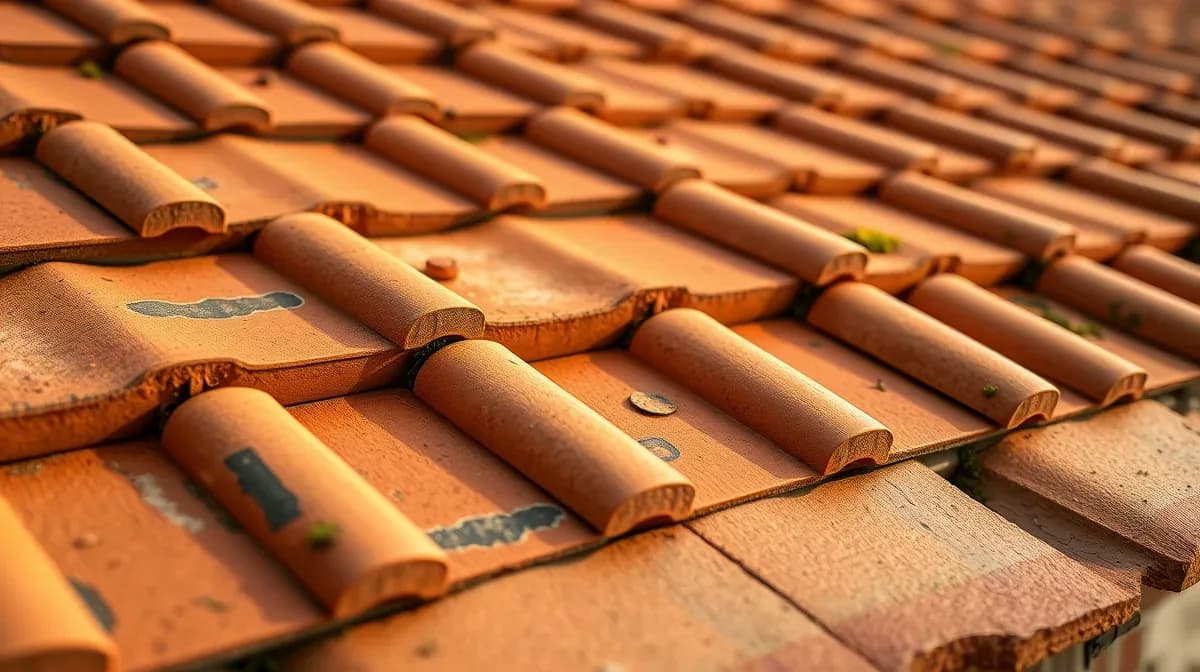
Around the church and along the older streets the roofs are clay rather than concrete, and they are handled differently. Sound handmade or machine-made clay tile is worth salvaging and relaying; it will usually outlast the concrete that replaced it elsewhere in the town, and stripping a roof of it to fit modern tiles is throwing away the better material.
Period property near the conservation area brings its own rules. Like-for-like repair in the same material and detail is normally acceptable without a separate application. Anything that changes the specification — a different tile, a different profile, a rooflight where there was not one — usually needs consent. We tell you which side of that line a job falls on at survey, not once the scaffold is up.
Our services in Thatcham
Roof repairs
Re-fixing slipped tiles, re-bedding ridges, and tracing leaks that turn out to be gutters.
Re-roofing & new roofs
Full re-covers on estate concrete tile, and salvage-and-relay where the clay is worth keeping.
Guttering & roofline
Gutter clearing, re-sizing and replacement — the most under-rated job in a valley town.
Chimneys & leadwork
Repointing and flaunching on the older stacks around the church end of town.
Flat roofs
EPDM and fibreglass on the extensions and garages the estates are full of.
Moss removal & cleaning
Scraped and treated rather than jet-washed, for the reasons above.
Frequently asked questions
Ready for a free, no-obligation quote?
Call 01635 927069